
WINGED ELM

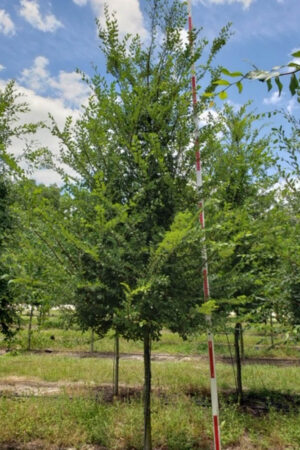
Winged Elm (Ulmus alata), also known as Cork Elm or Wahoo Elm, is a native Florida tree prized for its adaptability, unique bark, and fast growth. Here’s a detailed overview:
✅ Appearance & Characteristics
Distinctive Feature: Corky, wing-like projections on twigs and branches—most noticeable on younger growth.
Leaves: Simple, alternate, 2–4 inches long; dark green above, paler beneath; turn yellow in fall.
Flowers & Fruit: Small reddish flowers in early spring (not showy); fruit is a flat, winged samara.
Bark: Red-brown to gray, shallowly fissured with corky ridges.
Form: Canopy varies from pyramidal to vase-shaped; branches sweep outward gracefully.
✅ Size & Growth
Height: Typically 45–70 ft, occasionally up to 90 ft in natural forests.
Spread: 30–40 ft.
Growth Rate: Fast—ideal for quick shade.
USDA Zones: 6A–9B (thrives in North and Central Florida).
Lifespan: Long-lived, often up to 100 years.
✅ Care & Maintenance
Light: Full sun to partial shade.
Soil: Extremely adaptable—clay, sand, loam; acidic or alkaline; tolerates wet and dry sites.
Water: Drought-tolerant once established; also tolerates occasional flooding.
Pruning: Essential when young to develop a strong central trunk and avoid multiple leaders.
Fertilizer: Apply balanced fertilizer in spring for best growth.
✅ Salt & Drought Tolerance
Salt: Low tolerance—avoid direct salt spray or brackish water.
Drought: High tolerance once established—great for Florida’s variable climate.
✅ Landscape Uses
Shade Tree: Rapid growth and dense canopy make it excellent for cooling yards.
Specimen Tree: Unique corky wings add winter interest.
Urban Planting: Tolerates poor soils, air pollution, and confined spaces—ideal for streets, parking lots, and medians.
Wildlife Value: Seeds feed songbirds; larval host for Question Mark butterfly.
✅ Special Features
Hurricane Resistance: Strong branches withstand wind.
Low Maintenance: Minimal care once established.
Historical Use: Inner bark was used for rope in the 18th–19th centuries.
⚠️ Things to Watch
Dutch Elm Disease: Susceptible, but less problematic in Florida.
Shallow Roots: Avoid planting too close to sidewalks or foundations.
Pruning Needs: Regular early pruning for structural strength.
NOTE FROM JOEL
We love, love, love this tree. It is truly one of the most unique trees in Florida. When fully foliated, it is a large canopied, weeping tree that will beautify any setting. When defoliated, you get to clearly see the winged effect on all the limbs and even the trunk. The winged effect is almost eerie because of its uniqueness. If you want something no one else has, this it it.
