
MAPLE (FLORIDA FLAME)

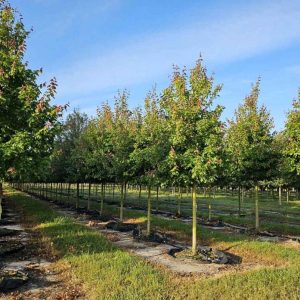
The Florida Flame Maple (Acer rubrum ‘Florida Flame’) is a cultivar of the native red maple, specially selected for its vibrant fall color and adaptability to Florida’s climate. Here’s a comprehensive overview:
✅ Appearance & Characteristics
Foliage: Bright red emerging leaves in spring; fiery red, orange, and yellow hues in fall—even in Florida’s warm climate.
Form: Upright oval crown when young; becomes rounded and spreading with age.
Flowers & Fruit: Tiny red flowers in late winter; followed by red winged samaras (seeds).
Bark: Smooth gray when young, becoming ridged with age.
✅ Size & Growth
Height: Typically 40–60 ft, sometimes up to 100 ft in native habitats.
Spread: 25–40 ft wide.
Growth Rate: Fast—about 12–18 inches per year; reaches maturity in 20–25 years.
USDA Zones: 8A–10 (ideal for most of Florida).
Cold Tolerance: Hardy down to 15–20°F.
✅ Care & Maintenance
Light: Full sun to partial shade.
Soil: Prefers moist, acidic, well-drained soil; tolerates average soils but struggles in alkaline (pH >7.2).
Water: Thrives in moist conditions; drought tolerance is low, so irrigation is needed during dry spells.
Fertilizer: Apply balanced fertilizer 3 times a year (spring, summer, fall).
Pruning: Minimal—remove dead or weak branches; avoid topping cuts.
Transplanting: Easy to transplant but protect young trunks from sunscald.
✅ Salt & Drought Tolerance
Salt Tolerance: Low—not suitable for direct coastal exposure.
Drought Tolerance: Low—requires consistent moisture for best growth.
✅ Landscape Uses
Shade Tree: Provides a lush canopy for cooling outdoor spaces.
Street Tree: Works well in residential areas with irrigation.
Specimen Tree: Stunning focal point for large yards or woodland gardens.
Rain Gardens & Wet Sites: Ideal for areas that stay moist after rain.
Wildlife Value: Seeds feed squirrels and birds; attracts pollinators and moth larvae.
✅ Special Features
Fall Color in Warm Climates: One of the few trees that delivers vibrant autumn foliage in Florida.
Heat & Humidity Tolerant: Performs well in Florida’s subtropical conditions.
Native Adaptation: Supports local ecosystems and biodiversity.
⚠️ Things to Watch
Weak Wood: Susceptible to limb breakage in storms.
Surface Roots: Can interfere with mowing and sidewalks.
Chlorosis: May occur in alkaline soils due to manganese deficiency.
