
QUEEN PALM

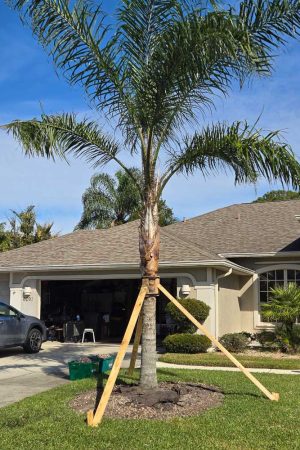
Queen Palm (Syagrus romanzoffiana) is one of the most popular ornamental palms in Florida, prized for its elegant, tropical look and fast growth. Here’s a detailed overview:
✅ Appearance & Characteristics
Fronds: Long, glossy, feather-like leaves that arch gracefully, creating a lush canopy.
Trunk: Smooth gray with evenly spaced leaf scars; typically slender.
Flowers & Fruit: Cream-colored flowers in summer; clusters of bright orange fruits in winter. Fruits can be messy when they drop.
✅ Size & Growth
Height: Commonly 30–40 ft, sometimes up to 50 ft in Florida landscapes.
Spread: About 15–25 ft canopy.
Growth Rate: Fast—2–3 ft per year under ideal conditions.
USDA Zones: 9B–11 (thrives throughout Florida).
Cold Tolerance: Down to 25°F; suitable for Central and South Florida.
✅ Care & Maintenance
Light: Full sun preferred; tolerates partial shade.
Soil: Adaptable but prefers slightly acidic, well-drained soil.
Water: Moderate; drought-tolerant once established.
Fertilizer: Apply palm-specific fertilizer with micronutrients (especially potassium and manganese) 3 times a year.
Pruning: Not self-cleaning—remove dead fronds and fruit stalks manually.
Spacing: Plant at least 10 ft from structures; 6-8 ft apart for groupings.
✅ Salt & Drought Tolerance
Salt: Moderately salt-tolerant—good for coastal areas but not direct beachfront.
Drought: Moderate drought tolerance once established.
✅ Landscape Uses
Specimen Plant: Creates a dramatic focal point in tropical gardens.
Driveway or Poolside Accent: Adds elegance and shade.
Group Planting: Works well in rows or clusters for a regal look.
Backdrop for Beds: Complements hibiscus, philodendron, and other tropical plants.
⚠️ Things to Watch
Fruit Mess: Dropped fruit can attract pests and sprout seedlings.
Nutrient Deficiencies: Prone to potassium and manganese deficiency (frizzle top).
Wind Vulnerability: Shallow root system—avoid planting too close to structures.
