
POND CYPRESS

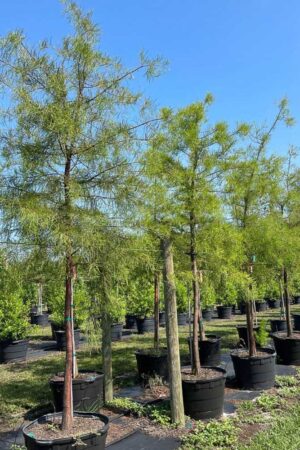
The Pond Cypress (Taxodium ascendens) is a native tree that thrives throughout Florida, especially in wetland areas. Here’s what makes it unique in the Florida landscape:
Overview
Appearance: A deciduous conifer with soft, feathery, light-green needles that turn golden-brown in fall before dropping. It has a straight trunk and a narrow, pyramidal crown when young.
Size: Typically grows 40–70 feet tall, sometimes up to 80 feet, making it a striking vertical element in natural and landscaped settings.
Bark: Gray to reddish-brown, fibrous, and deeply furrowed.
Habitat in Florida
Found in pond margins, swamps, and acidic wetlands, especially in the central and northern parts of the state.
Prefers still, nutrient-poor waters, unlike Bald Cypress which favors nutrient-rich floodplains.
Common in natural preserves and wetland restoration projects.
Growth Conditions
USDA Zones: 5–10, so it thrives across most of Florida.
Soil: Wet, acidic soils are ideal, but it can adapt to drier conditions once established.
Sunlight: Full sun is best for healthy growth.
Benefits
Provides erosion control and stabilizes wetland soils.
Supports wildlife habitat, offering shelter for birds and aquatic species.
Adds a native, low-maintenance option for large properties with wet areas.
Special Features
May develop “knees” (woody root projections) in wet soils, though usually fewer and smaller than Bald Cypress.
Highly drought-tolerant after establishment, despite its preference for wet sites.
