
DAHOON HOLLY

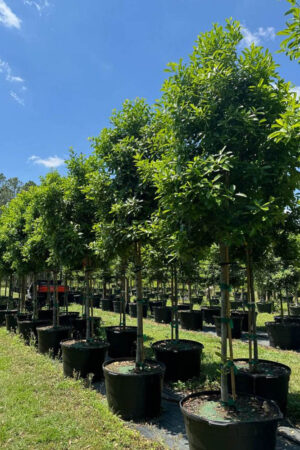
Dahoon Holly (Ilex cassine) is a native Florida evergreen tree that thrives in the state’s climate and is prized for its beauty, adaptability, and ecological benefits. Here’s a detailed guide:
✅ General Characteristics
Type: Evergreen tree or large shrub.
Height & Spread: Typically 20–30 ft tall, 8–12 ft wide; can reach up to 40 ft in ideal conditions.
Leaves: Glossy, dark green, 2–4 inches long, with smooth or slightly serrated tips.
Flowers: Small white or greenish-white blooms in late spring to early summer (not showy).
Fruit: Bright red berries in fall and winter (only on female trees; requires a male nearby for pollination). Berries attract birds and wildlife.
Growth Rate: Moderate.
USDA Zones: 7A–11 (perfect for all of Florida).
Native Habitat: Swamps, bogs, wet flatwoods, pond edges, and hammocks.
✅ Why It Thrives in Florida
Moisture Adaptability: Naturally a wetland species; tolerates seasonally flooded soils but also adapts to drier sites with irrigation.
Salt Tolerance: Moderate tolerance to salt spray (not flooding) – suitable for coastal areas but avoid direct saltwater inundation.
Urban Friendly: Handles confined spaces and some air pollution; good for streetscapes and urban landscapes.
Wildlife Benefits: Provides food and shelter for birds, small mammals, and pollinators.
✅ Care & Maintenance
Light: Full sun to partial shade (6–8 hours sunlight ideal).
Soil: Prefers moist, acidic soils but tolerates clay, sand, or loam; avoid prolonged drought without irrigation.
Watering:
First year: Deep watering regularly.
Mature trees: Moderate drought tolerance; thrives in moist conditions. [gfloutdoors.com]
Spacing: For hedges/screens, plant 5–10 ft apart; allow room for mature spread. [greg.app]
Pruning: Minimal; prune for shape or to remove dead branches. Naturally forms an attractive pyramidal or oval crown. [edis.ifas.ufl.edu]
Fertilization: Use a balanced, slow-release fertilizer in spring if needed.
Propagation: Seeds (require dormancy) or cuttings; dioecious (need male + female for berries).
✅ Landscape Uses
Specimen Tree: Elegant form with glossy foliage and red berries.
Privacy Screens & Buffers: Can be clipped for dense hedges or left natural for open growth.
Wetland Gardens & Rain Gardens: Ideal for low-lying or seasonally wet areas.
Wildlife Gardens: Supports birds and pollinators.
✅ Florida-Specific Tips
Best planted in fall or early spring for root establishment before summer heat.
Avoid very dry, exposed sites unless irrigation is available.
Moderate salt spray tolerance makes it suitable for inland coastal landscapes, but not for direct saltwater flooding.
