
DRAKE ELM

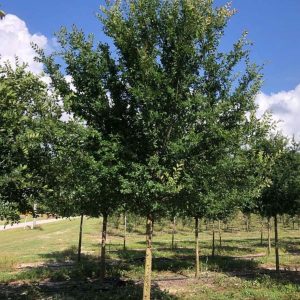
Drake Elm (Ulmus parvifolia ‘Drake’), also known as Chinese Elm or Lacebark Elm, is a popular shade tree in Florida thanks to its beauty, adaptability, and resilience. Here’s a detailed overview:
✅ Appearance & Characteristics
Leaves: Small, glossy, dark green, about 2 inches long, with serrated edges; semi-evergreen in Florida (retains foliage most of the year).
Bark: Exfoliating bark in mottled shades of gray, green, orange, and brown, giving year-round ornamental interest.
Form: Graceful, rounded or vase-shaped canopy with arching branches; some specimens develop a slightly weeping habit.
Flowers & Seeds: Inconspicuous flowers; produces papery, winged samaras in fall or spring depending on climate.
✅ Size & Growth
Height: Typically 35–50 ft; spread 30–40 ft.
Growth Rate: Fast—up to 2–3 ft per year under ideal conditions.
Lifespan: Can live 70+ years.
USDA Zones: 7B–10B (thrives throughout Florida).
Canopy: Dense shade; clearance can be raised by pruning lower branches.
✅ Care & Maintenance
Light: Full sun for best growth.
Soil: Extremely adaptable—sand, clay, loam; tolerates a wide pH range and occasional wet or dry conditions.
Water: Moderate; drought-tolerant once established.
Fertilizer: Apply balanced fertilizer in spring.
Pruning: Train young trees to a single trunk for strength; prune in late winter to maintain shape and clearance.
Salt Tolerance: Moderate—okay for coastal areas but not direct beachfront.
✅ Special Features
Disease Resistance: Highly resistant to Dutch elm disease and elm leaf beetle.
Urban Toughness: Handles air pollution, compacted soil, and heat well.
Wind Resistance: Performs better than many elms in hurricanes; shallow roots rarely damage pavement.
✅ Landscape Uses
Shade Tree: Ideal for lawns, parks, and large properties.
Street Tree: Tolerates urban conditions and pollution.
Specimen Tree: Stunning bark and graceful canopy make it a focal point.
Parking Lots & Medians: Recommended for urban landscapes.
Florida-Friendly Landscaping™: Endorsed for sustainable designs.
⚠️ Things to Watch
Root System: Wide-spreading; avoid planting too close to sidewalks or sewer lines.
Invasive Potential: Can reseed prolifically—check local guidelines.
Wind Breakage: Branches can snap in extreme storms if not properly pruned.
