
LIVE OAK

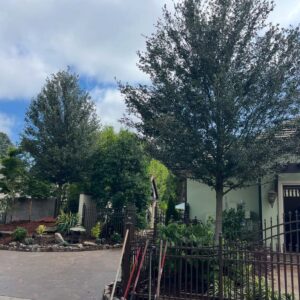
Southern Live Oak (Quercus virginiana), often called Live Oak, is one of Florida’s most iconic and resilient native trees. Here’s a comprehensive overview:
✅ Appearance & Characteristics
Form: Massive, spreading canopy with arching limbs often draped in Spanish moss.
Leaves: Evergreen to semi-evergreen; dark green, leathery, 2–5 inches long.
Bark: Starts reddish-brown and smooth, matures to gray-black with deep furrows.
Flowers & Fruit: Inconspicuous spring catkins; produces oval acorns (¾ inch) in fall.
Wildlife Value: Acorns feed birds, squirrels, deer; canopy hosts epiphytes like Spanish moss and staghorn ferns.
✅ Size & Growth
Height: Typically 40–80 ft.
Spread: 60–120 ft—one tree can shade half a football field.
Growth Rate: Moderate; faster when young, slows with age.
Lifespan: Can live hundreds of years; some specimens exceed 1,000 years.
USDA Zones: 7B–10B (thrives throughout Florida).
✅ Care & Maintenance
Light: Full sun preferred; tolerates partial shade.
Soil: Adaptable—sand, loam, clay; prefers well-drained soil.
Water: Very drought-tolerant once established; occasional irrigation during dry spells.
Fertilizer: Minimal; apply balanced fertilizer if needed.
Pruning: Train a dominant leader early; prune annually for first 5 years, then every 3–5 years until mature for strong structure.
Spacing: Plant at least 20 ft from buildings and 10 ft from sidewalks due to wide roots and canopy.
✅ Salt & Drought Tolerance
Salt: Moderate—tolerates salty wind and occasional salt spray.
Drought: High tolerance once established; thrives in sandy uplands.
✅ Landscape Uses
Shade Tree: Florida’s premier shade tree—reduces summer heat dramatically.
Windbreak: Among the most hurricane-resistant trees thanks to deep roots and flexible branches.
Specimen Tree: Adds timeless beauty and property value.
Wildlife Habitat: Supports birds, mammals, and pollinators.
Historic & Aesthetic Appeal: Creates dramatic Southern landscapes with Spanish moss.
✅ Special Features
Hurricane Champion: University of Florida research ranks live oaks as the most wind-resistant tree species.
Long-Lived: Can survive for centuries with minimal care.
Cultural Icon: Used historically for shipbuilding (USS Constitution “Old Ironsides”).
⚠️ Things to Watch
Space Requirements: Needs a large yard—roots can lift sidewalks and driveways.
Messiness: Drops leaves, acorns, and Spanish moss clumps.
Pests/Disease: Generally hardy; occasional galls, aphids, or boring insects; oak wilt rare in Florida.
