
MEDJOOL PALM

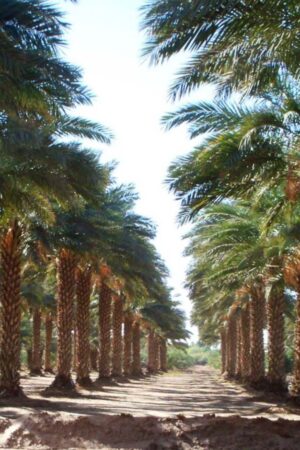
The Medjool Date Palm (Phoenix dactylifera ‘Medjool’) is a majestic and highly sought-after palm in Florida, prized for its ornamental beauty and edible fruit. Here’s what makes it special:
Overview
Appearance: Tall, elegant palm with a smooth trunk marked by diamond-shaped leaf scars and a lush canopy of arching, feathery fronds that can reach up to 20 feet long. It produces large clusters of sweet, caramel-like Medjool dates, adding both visual and culinary appeal.
Size: Mature palms typically grow 60–80 feet tall with a spread of 12–20 feet, making them a dramatic focal point in large landscapes.
Origin: Native to North Africa and the Middle East, adapted for warm, sunny climates.
Suitability in Florida
Climate: Best suited for USDA Zones 9B–11, thriving in South and Central Florida. It tolerates heat and drought well but is not frost-hardy, so it struggles in North Florida without protection.
Sunlight: Requires full sun for optimal growth and fruiting.
Soil: Prefers well-drained sandy or loamy soil; avoid waterlogged conditions. A wet-to-dry irrigation cycle is ideal.
Spacing: Needs at least 20 feet between trees due to its wide canopy and root spread.
Benefits
Ornamental Value: Adds a luxurious, tropical look to streetscapes, resorts, and large residential properties.
Fruit Production: Female trees produce large, sweet Medjool dates after 3–5 years, making them both decorative and functional.
Wildlife Habitat: Provides shelter for birds and pollinators.
Considerations
Humidity Challenges: Florida’s humid climate can lead to fungal issues like leaf spot and fruit rot; good air circulation and proper irrigation help prevent this.
Maintenance: Requires pruning of old fronds and occasional fungicide treatments in humid regions. Fertilize 3 times per year with a balanced palm fertilizer (e.g., 8-2-12 with magnesium and manganese)
Cold Sensitivity: Protect during rare freezes in North Florida using frost cloth or mulch.
